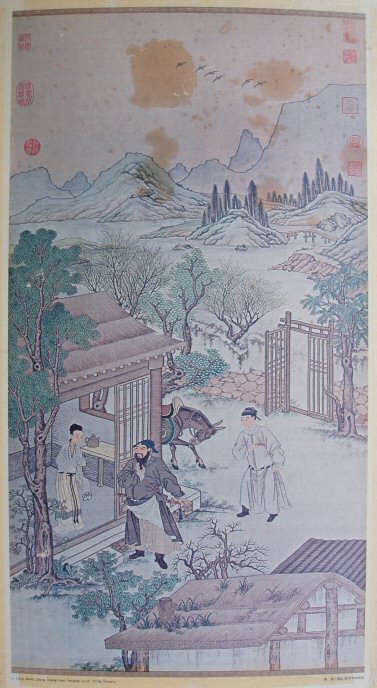
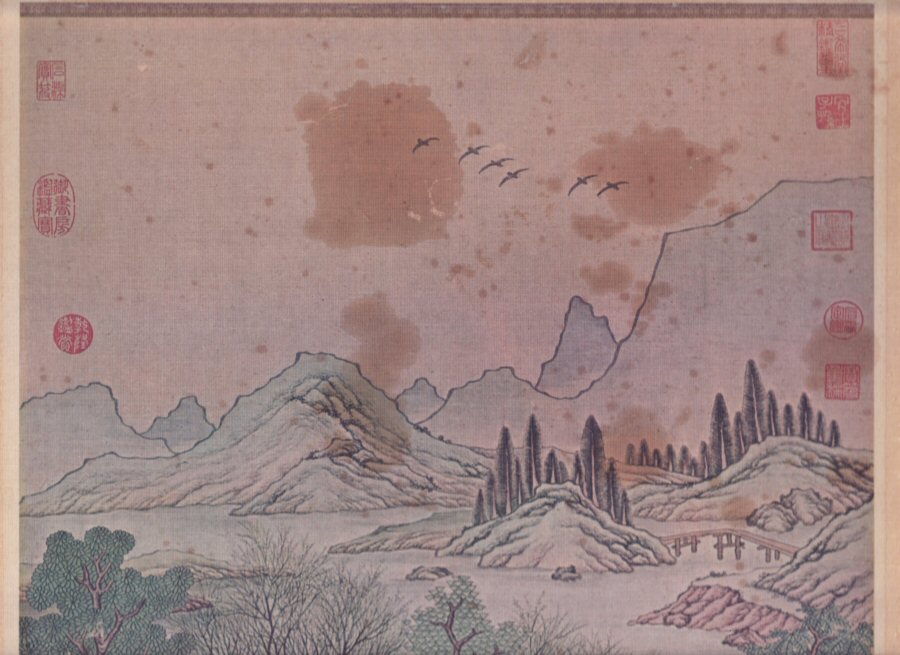
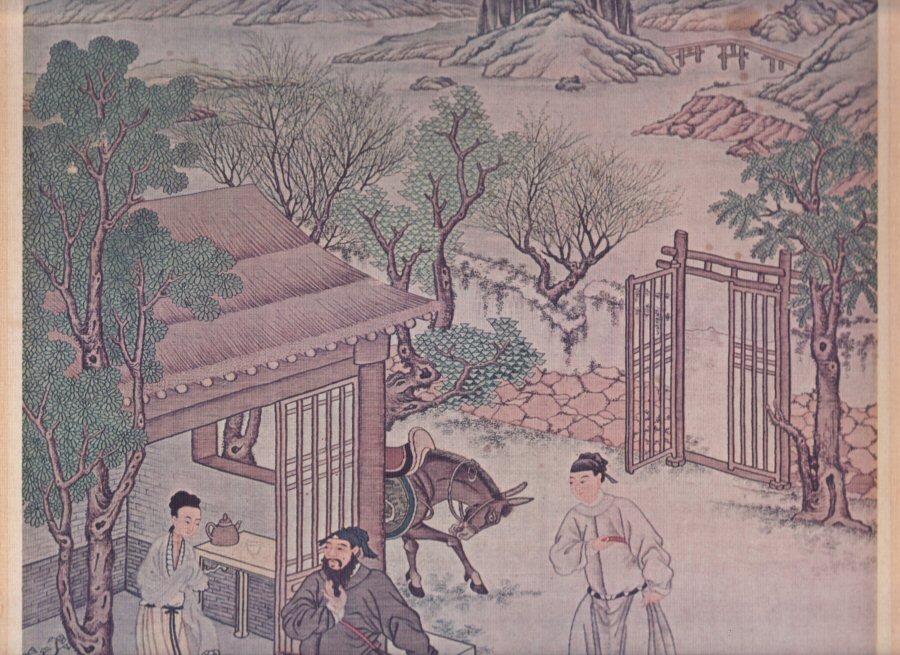


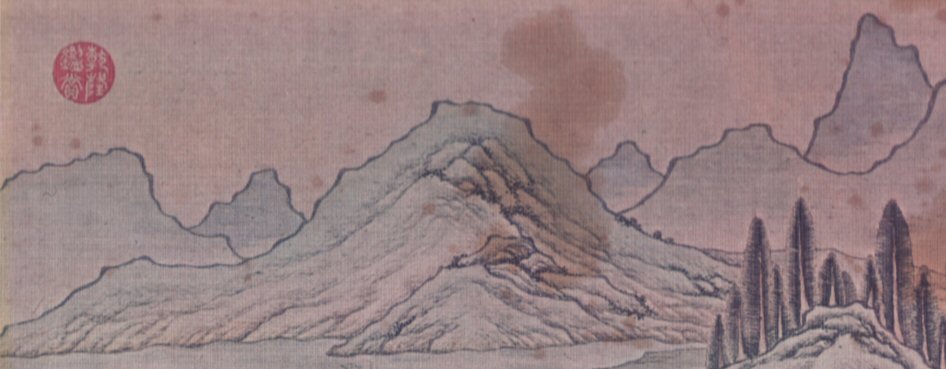
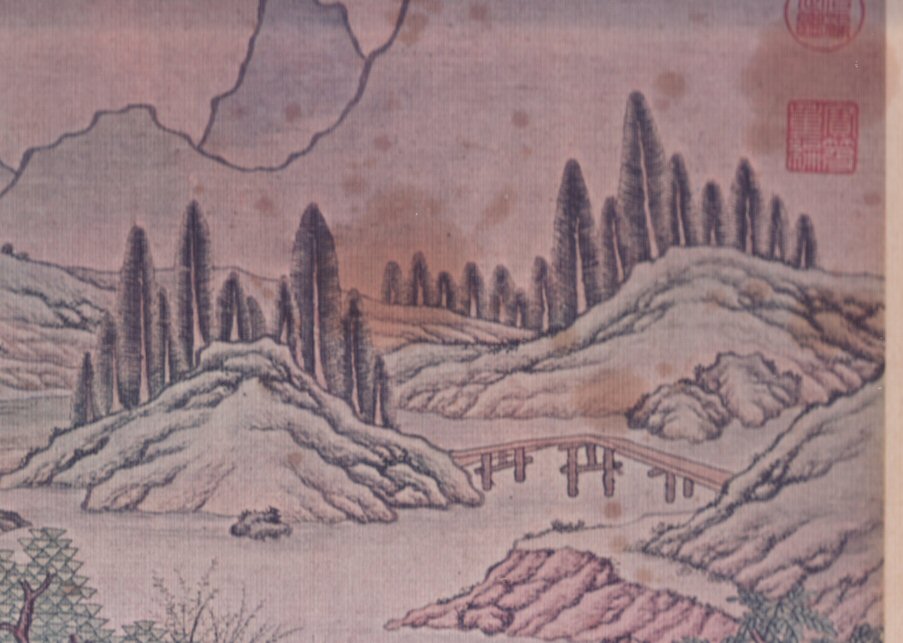


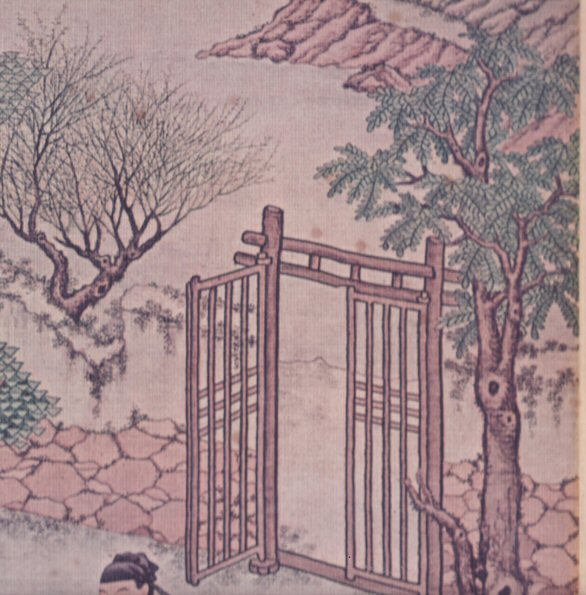

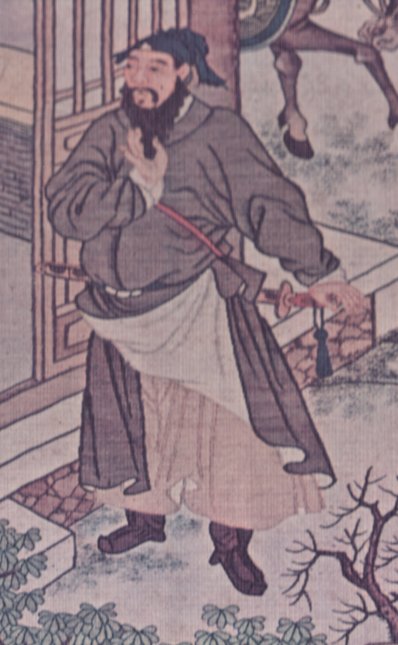
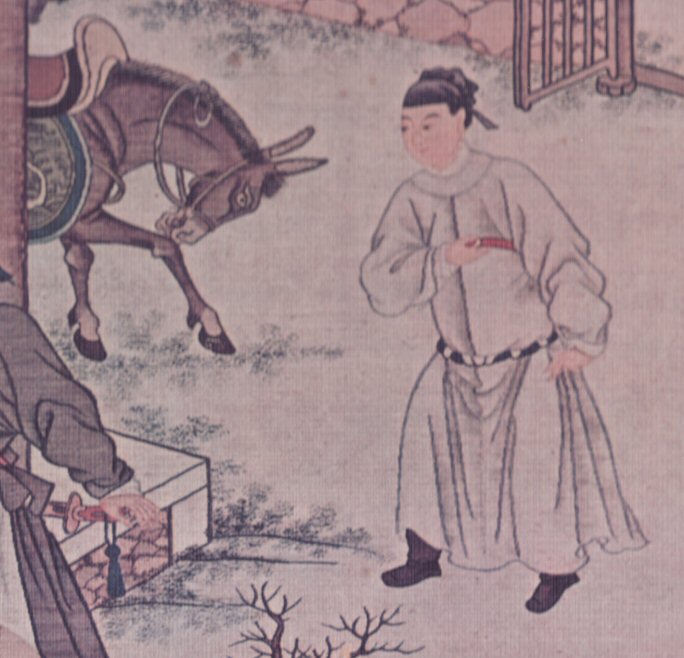

Qing Dynasty kesi--The scroll of the legend of three Tang Dynasty musketeers--
Li Jing, Red-bear Man and Hong fu nu (girl holding a red dust brush).
清緙絲風塵三俠---李靖與紅拂女遇虬髯客圖
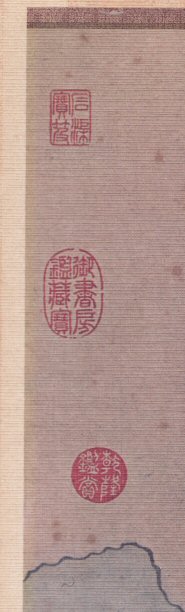
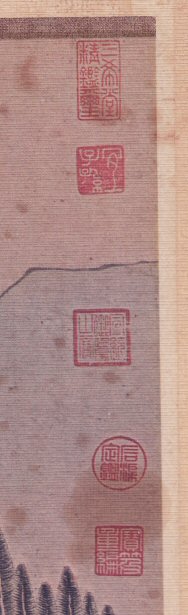
With 7 seals from Emperor Qianlong 乾隆 (1735-1796) : [三希堂精鑒壐], [宜子孫], [石渠定鑑], [石渠寶笈],
[御書房鑑藏寶], [乾隆鑑賞], [寶笈重編]
With 1 seal from Emperor Xuantong 宣統 (1908-1931) ; [宣統御覽之寶]
Based on the seal policy of Emperor Qinlong, this kesi painting belonged to one of the most important collections of Qinlong.
Kesi,or Cut Silk,refers to silk tapestry with cut designs, and is a unique Chinese traditional silk weaving technique. Archaeological evidence indicates that silk tapestries with cut designs were produced in China at least as early as the Tang Dynasty (618-907). In the Song Dynasty (960-1279), tapestries became popular for their classical coloring, refined workmanship, and realistic designs, making it the golden age of this art form in China. In fact, the National Palace Museum is renowned for its impressive collection of Song Dynasty tapestries. Tapestries of the following the Yuan Dynasty (1279-1368) sometimes also included threads of gold for a unique and opulent effect. Unfortunately, few such examples survive today. It was during the Ming Dynasty (1368-1644) that the art of tapestry witnessed a revival. Many tapestries made in the early Ming Dynasty were imitations of works in the Song Dynasty, but artisans were later able to create works with vibrant compositions and increasingly refined weaving. Some tapestry designs were even embellished with brushwork and colors for an even more beautiful manner. Tapestries of the Qing Dynasty (1644-1911) followed with increasing precision and evenness in terms of weaving techniques. The range of subject matter also blossomed as designs became ever more abundant and complex. The practice of combining tapestry and painting spread, resulting in further variety and beauty for this art form.
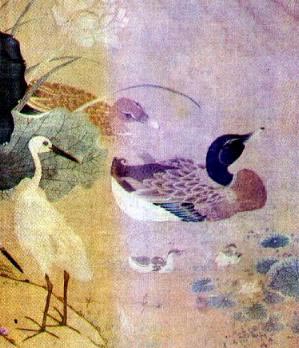
Kesi (Cut silk) of the Song Dynasty
Tapestry is an art of weaving accomplished on a basic flat loom. With a combination of partial weft (vertical) threads attached to full warp (horizontal) threads, it differs from other woven silk goods that have full warp and weft threads. In other words, the warp threads are first set in place and then threads of various colors and lengths are shuttled and attached for the weft to create the desired design or pattern. When seen up close, the colored threads that make up the images are all independent. Therefore, it is particularly difficult to make patterns with curves using only vertical weft threads. Furthermore, since the edges of forms and patterns often appear abrupt and have a saw-tooth gap where they are attached to the warp, they look as if they are cut out. For this reason, fine silk tapestry is also referred to as "cut silk" in Chinese. Subject matters in cut silk include human figures, mountain and water scenery, flowers and birds, etc.
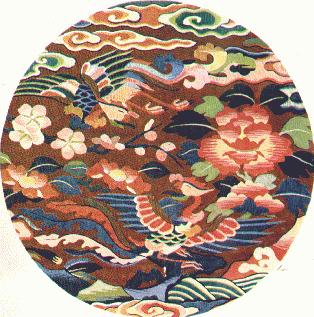
Kesi (Cut silk) of the Ming Dynasty
Silk tapestry with cut designs is one of the most artistic forms of traditional Chinese handicraft. Though many of the artisans who made them are anonymous, their works reveal an exceptional level of skill and patience as well as a considerable degree of artistic cultivation. The National Palace Museum is home to a large collection of tapestries from the ages, and this special exhibition represents a selection of some of the finest works to provide viewers with an opportunity to further appreciate and understand this important art form in traditional China.
所謂緙絲,是以桑蠶絲為原料,先將本色絲經於木機上,再將畫稿襯於經線下,用毛筆將花紋輪廓描摹到經紗上,用多把小梭子穿引各色絲線,根據花紋顏色需要隨意更換梭子,分區分色挖織而成,因而表現力極強,稱之為“通經斷緯”。
緙絲首先產生於中國。中國最早的緙絲實物是1973年新疆吐魯番阿斯塔那唐墓出土的幾何紋緙絲帶子。北宋時期,緙織技術有了長足的發展,傳世作品亦見增多。著名學者朱啟鈐《清內府藏刻絲書畫錄》中收入宋代緙絲品目113件,其中70件收藏於臺北故宮博物院。
在當時,完成一件緙絲作品並不容易,因而緙絲書法作品與繪畫作品相比數量極少,而且作品篇幅也不大,一般為十幾字至幾十字,這種狀況在其後的元明時代也是如此。直到清乾隆時期,中國緙絲技術達到頂峰,因乾隆皇帝本人酷愛,出現了一大批緙絲書法長卷。《秘殿珠林》、《石渠寶笈》共著錄清代緙絲書畫作品91件,其中書法作品23件。
緙絲由於融入織造之美和繪畫之美,顯然是超勝於其他織物。董其昌謂之“山水分遠近之趣,樓閣得深邃之體,人物具瞻眺生動之情,花鳥極綽約嚵唼之態,佳者較畫更勝”,尤其是宮廷藏品,非想像可及的。
由於是以蠶絲做為原材料,緙絲就多了一份細膩。又因盛于江南吳越之地,便多了幾抹少有的奢華和閒情。手工藝傳達一個民族對於美的追求,中國人對於美有最為獨特的見解,因為深沉,所以表現出來的就不簡單、不浮躁、不過實。而是簡約的、淡雅的和靈動的無我意境之美,將絲的質感融入畫中,使其隨意而不受經緯交錯的強性制約,隨欲作花。當然就可以“以梭代筆”了。
在欣賞一件優秀的緙絲作品時,注重的不是它是否真實的體現了繪畫之實,而重視的是那豔若蒸霞,華麗無比的工藝質感,其次才是摹緙織法的精妙。如緙絲技法中的“合色戧”,就自然巧妙的解決了織造過程中色線暈染漸變的效果。
總的來說,中國緙絲的美是超出緙絲畫面本身的,更多的是中國人對於絲織物的一種崇尚之美,因為理解了絲才能如此真實不加造作的運用了絲的質感,創作出驚豔世間的天工之作。/End
由於歷史原因,相當數量的中國緙絲作品流失海外。2001年以來,一些回歸緙絲珍品開始出現在北京的藝術品拍賣市場,但拍賣行情一直不溫不火。
2001年底,北京中貿聖佳的拍賣會推出了一件同樣入編《石渠寶笈》的緙絲薑晟書《乾隆御制八徵耄念之寶記》。“八徵”是評定仁君賢帝的標準。乾隆臨近八十歲時,有感人入耄老之年,難免身體衰弱,頭腦昏饋,身為皇帝,一日在位,就不可不以“八徵”之準則自警,遂鐫“八徵耄念之寶”,鈐印於御筆之上。當朝的兵部侍郎姜晟,將這篇文章以隸書恭敬抄錄,內務府以其為底稿,交織染局用緙織之法,製成手卷。
該緙絲手卷後被溥儀鈐璽並攜帶出宮,之後被海外藏家購得。但回流國內後並未引起重視,當時以120萬元開槌,343.2萬元的價格成交。
2002年春,中貿聖佳又推出乾隆《御制御筆十全記緙絲》手卷,該手卷是乾隆皇帝把他親手領導的戰爭和勝利,歸納為“十全武功”,親筆書寫成御冊,命清宮造辦處按手書御冊原樣織成的緙絲,以352萬元成交。該手卷從日本回流,一度引起各界極大震動。
2002年6月,在翰海春季拍賣會古代書畫專場上,備受收藏家矚目的北宋緙絲米芾題詩《長春圖》,以720萬元拍出,雖然創下當時緙絲拍賣世界記錄,但遠不及專家估價的1000萬元左右。
《長春圖》高38釐米、長245.5釐米。卷引首緙篆書“長春圖”三字,本幅內緙米芾五言樂府詩,大字行書,並綴緙長春花、竹石、遊蜂。該緙絲還鈐有宋徽宗的“乾卦圓印”和“雙龍方印”各兩方,首尾各鈐一方。集織錦、書法、繪畫諸藝術於一體,不僅是中國緙絲織造藝術的瑰寶,也是中國書法藝術的罕見珍品,歷經近1000年的聚散遞藏,清朝以後一直收藏於紫禁城內,清朝滅亡後,被溥傑帶出宮,流散到民間。
專家認為,緙絲繪畫藝術品篇幅一般較大,多為皇家專制而沒有副品,相對於一般書畫作品更顯數量稀少,隨著其收藏價值逐漸被世人所瞭解,勢必成為新的藝術品市場熱點。
========================================================================================================
《石渠寶笈》是清代乾隆、嘉慶兩朝編纂的宮廷收藏的大型著錄文獻,書中涉及的文物主要為自晉、六朝、隋唐直至清朝當代的歷代書法、繪畫、碑帖、版本、緙絲等,有初編、續編和三編,《石渠寶笈》初編成於乾隆十年,續、三編分別成書於乾隆五十八年和嘉慶二十一年《石渠寶笈》收錄作品計7757件,卷帙浩繁,蔚為壯觀。《石渠寶笈》是根據作品的鑒定等級,按照作品在宮中貯藏的地點為次序以“ 千字文” 字頭編號來編纂的,書中詳細記載了作品稱、質地、尺寸、款識、前代鑒藏印記、題跋以及清內府印記、乾隆皇帝過目的題跋詩文。《石渠寶笈》可以說是乾嘉時期宮廷收藏的一個大檢驗。是由皇帝參與並敕命文組成一個編纂班子,有計劃地去整理、鑒定研究、著錄、出版的大規模文化工程。《石渠寶笈》的著錄有嚴格的體例,加蓋印章也有嚴格的格式。《石渠寶笈初編》著錄的書畫都鈐有“乾隆御覽之寶”、“石渠寶笈”和殿座章,如果是被鑒定為“上等”的,則加鈐“乾隆鑒賞” “三希堂精鑒璽”和“宜子孫”印。
根據以上所說,這一幅緙絲畫可能是乾隆皇帝喜愛收藏品之一。
Click Here to Go Back to Embroidery Page
Click Here to Go Back to Homepage